Help to Buy Valuations: The Complete Process for Repaying or Selling
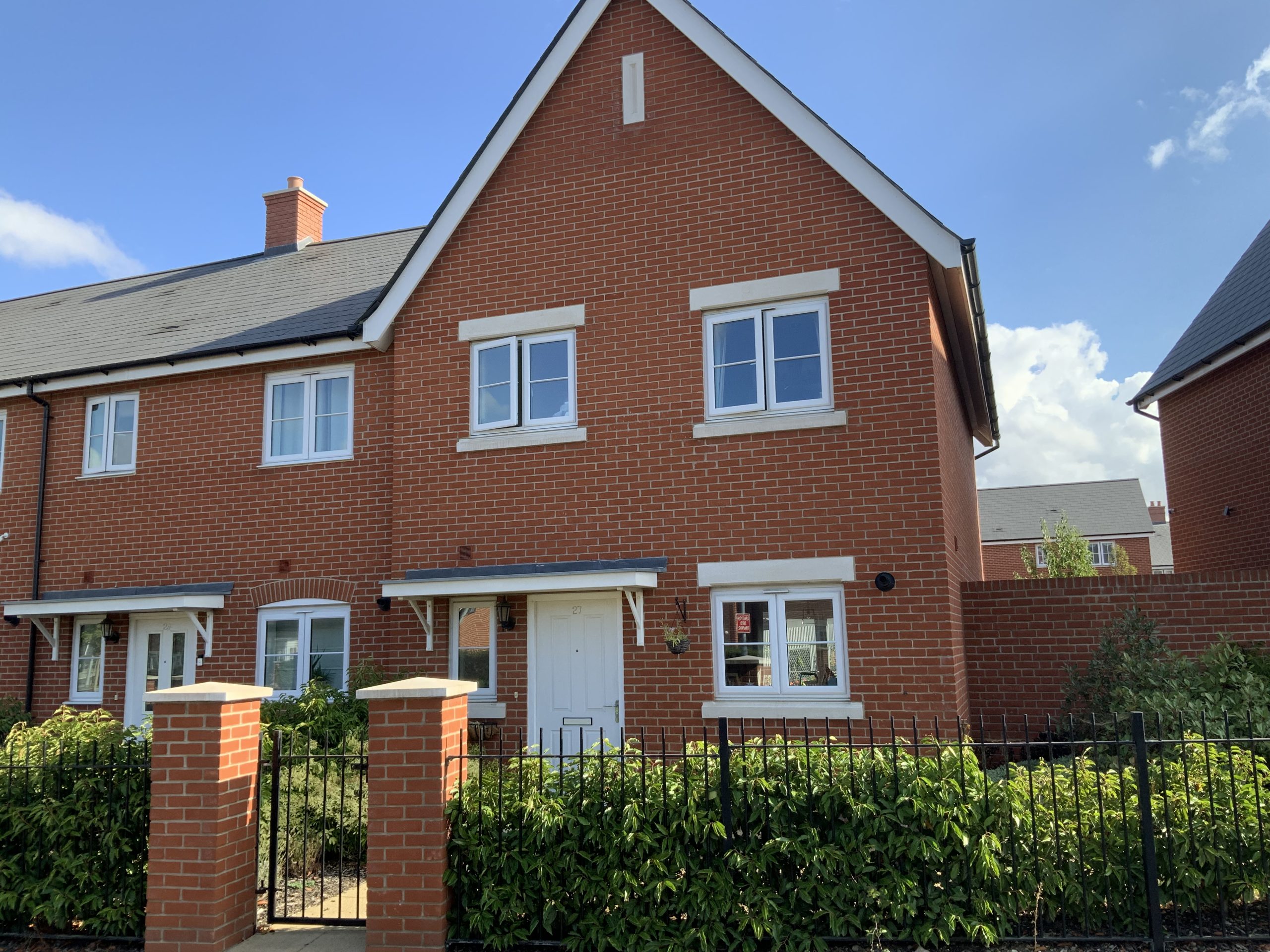
If you bought your home using a Help to Buy equity loan, there will come a point when you need to repay it — whether you’re selling, remortgaging, or simply paying off the loan to own your home outright. At that moment, one step becomes unavoidable: you’ll need a Help to Buy valuation carried out by a RICS Chartered Surveyor.
It sounds straightforward, and in many ways it is. But it’s also the stage where homeowners most often get caught out, usually by assuming an estate agent’s figure will do, or by leaving the valuation too late and watching it expire. This guide walks you through exactly how the process works, why it matters, and how to get it right the first time.
What is a Help to Buy valuation?
When you took out a Help to Buy equity loan, the government (through Homes England) lent you a percentage of your property’s value — commonly 20%, or up to 40% in London. The key thing to understand is that you don’t repay a fixed sum of money. You repay that same percentage of whatever your home is worth at the point you redeem the loan.
So if the government lent you 20% of your property’s value when you bought it, you’ll repay 20% of its current market value when you settle the loan.
If your home has risen in value, you’ll repay more than you borrowed. If it has fallen, you’ll repay less. This is why an accurate, independent valuation is so important — the figure directly determines how much money leaves your pocket.
A Help to Buy valuation establishes that current market value to an official, recognised standard so that Homes England and your lender will accept it.
Why an estate agent’s valuation won’t be accepted
This is the single biggest misunderstanding we encounter. Many homeowners assume that because an estate agent has given them a price for the property, that figure can be used to repay the loan. Unfortunately, it can’t.
Homes England requires a valuation produced by a RICS Chartered Surveyor in line with the “Red Book” — formally the RICS Valuation – Global Standards. The Red Book is the professional rulebook that every Chartered Surveyor must follow, and it guarantees that a valuation is independent, evidence-based and consistent.
Estate agents, by contrast, are valuing a property in order to win your instruction to sell. Their figures are often optimistic, and crucially they aren’t regulated to the same impartial standard. A RICS surveyor has no interest in the sale price — only in arriving at the true, defensible market value. That independence is exactly what protects you and what makes the figure acceptable to the scheme.
How long is a Help to Buy valuation valid?
A Help to Buy valuation is valid for three months from the date of the report. This is one of the most important details to plan around.
Three months can disappear quickly once you factor in solicitors, paperwork and the redemption process itself. If your valuation expires before the loan is repaid or the sale completes, you’ll need to commission a fresh one — which means additional cost and delay. Our advice is simple: don’t start the valuation too early, but don’t leave it as a last-minute scramble either. The ideal moment is once you’re genuinely ready to move forward with repayment or a sale.
The step-by-step process
Here’s what actually happens, from instruction to report:
- You instruct a RICS surveyor. Get in touch with details of the property, your loan provider, and your timescales. We’ll confirm the cost upfront and arrange a convenient appointment.
- A physical inspection takes place. Unlike some lender valuations, a Help to Buy valuation requires a surveyor to physically visit and inspect the property. We’ll walk through the home, noting its size, condition, layout and any improvements you’ve made.
- Comparable evidence is gathered. The surveyor researches recent sales of similar properties in your area to support the valuation with hard evidence, rather than guesswork.
- The report is produced in the correct format. Crucially, the valuation must be presented in the specific format Homes England requires. A report that isn’t in the right format can be rejected, even if the figure is sound.
- You submit it to repay or sell. The completed report is used to calculate your repayment and progresses your redemption, remortgage or sale.
A note on improvements
If you’ve made significant improvements to the property — an extension, a new kitchen, a loft conversion — these can be a point of discussion. In some circumstances, genuine improvements may be treated separately so that you aren’t effectively repaying a larger loan slice on value you created yourself. It’s worth flagging any major works to your surveyor at the outset, with evidence where possible.
What if your property has cladding?
If your Help to Buy property is a flat in a building with cladding or fire-safety concerns, the process can be more complicated. Many lenders and Homes England may require an EWS1 form — a document confirming the external wall system has been assessed for fire safety. Without one, a valuation may be difficult to produce, or the figure may be affected.
This is a specialist area, and every you’ll need a specialist surveyor. Morgan Sloane can help with these valuations. Find out more.
Getting it right the first time
A Help to Buy valuation isn’t simply a box-ticking exercise — it determines a significant sum of money and sits at the heart of your sale or redemption. Getting an accurate, properly formatted, RICS-compliant valuation protects you from overpaying and keeps your transaction moving.
At Morgan Sloane, we carry out Help to Buy valuations across Essex and much of England, and we handle the trickier cases — including cladded properties — every day. We’ll give you a clear quote, a prompt inspection and a report your lender and Homes England will accept.
Ready to repay or sell? Book your Help to Buy valuation today and speak to our team.
By Paul Holford
Related Insights
May 7, 2026
Japanese Knotweed in the Spotlight – Why Awareness Matters for Homeowners and Landlords
This morning, Japanese knotweed was featured on BBC Morning Live and RIP Off Britain, helping to shine a light on an issue that continues to affect homeowners, landlords, buyers and property professionals across the UK. It’s encouraging to see mainstream coverage raising awareness of the risks associated with invasive plants, particularly Japanese knotweed, and the...
Read more
February 24, 2026
Would You Pay £350K for an Island? A Surveyor’s Take on Real Value
Like many in property, we love a quirky listing! But when an island near Portmeirion hit the headlines recently, it got us thinking seriously about value beyond the guide price.
Read more